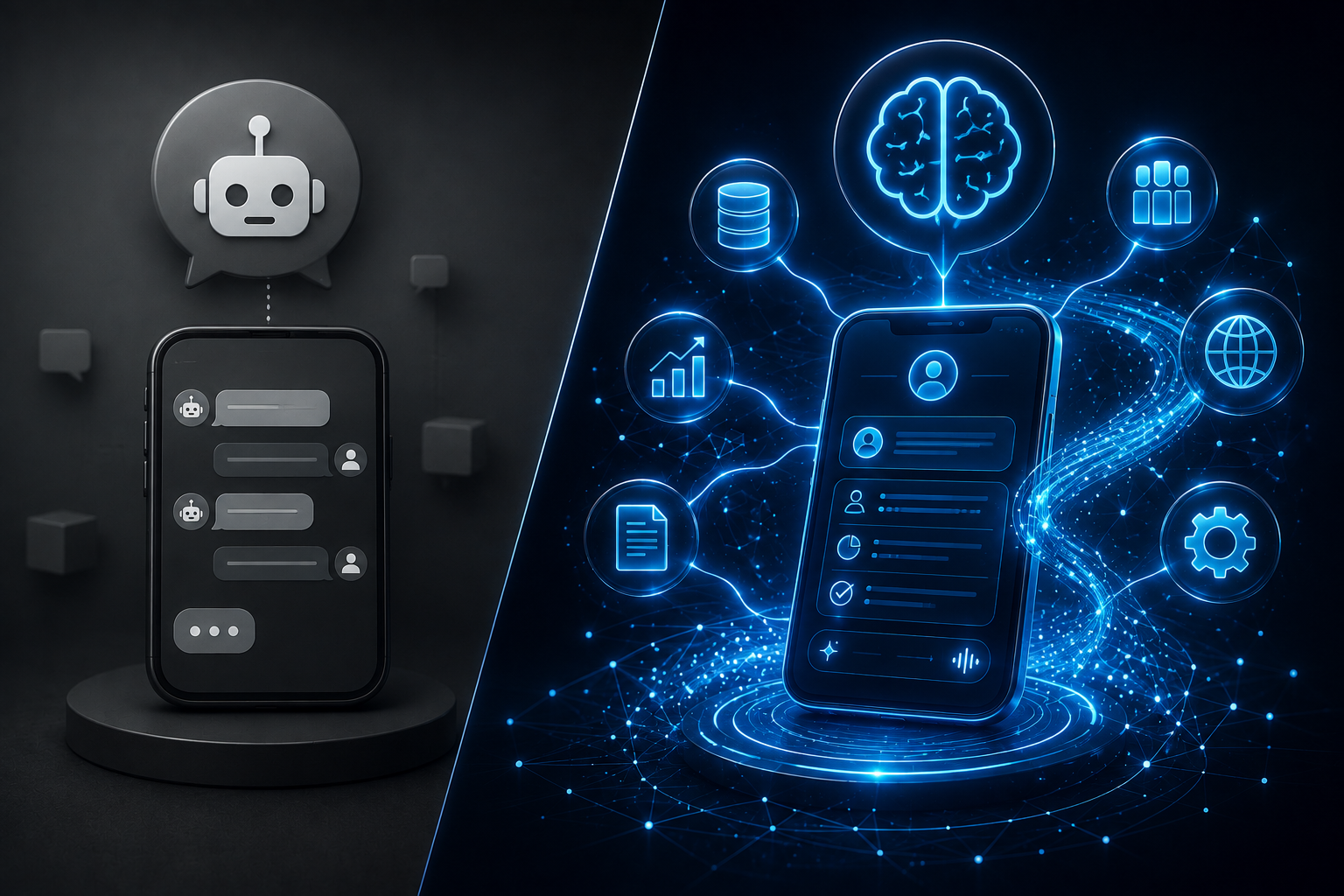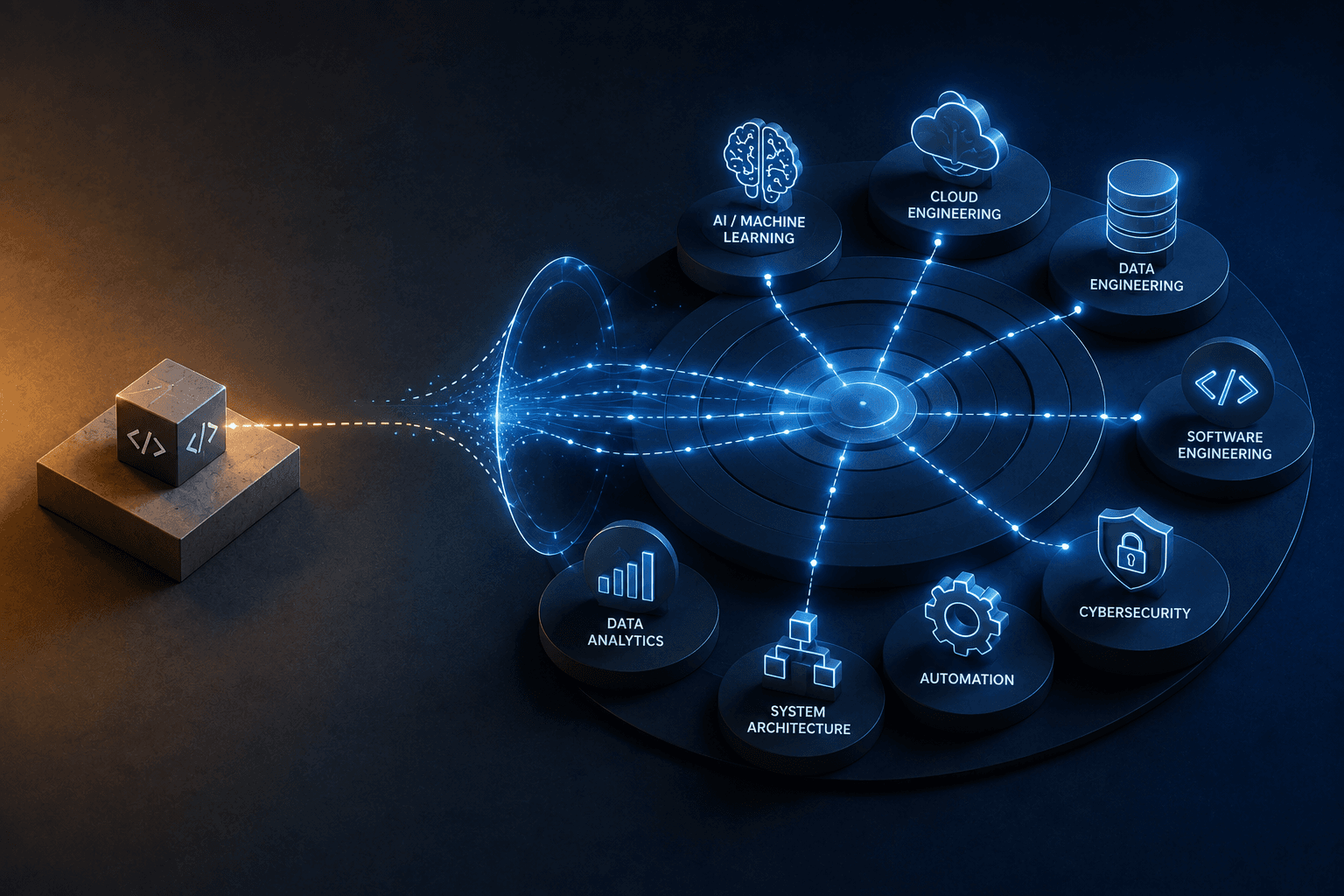
Software Outsourcing Is Changing. Companies Are No Longer Outsourcing Development. They're Outsourcing Technological Capability.
The Software Outsourcing Model That Dominated Two Decades Is Coming to an End
For more than two decades, software outsourcing operated on a clear and relatively simple logic: the client company had a need, documented it as a requirement, handed it to an external vendor, and waited to receive working code within an agreed timeline and budget. The vendor executed. The client approved. The project closed.
That model was useful as long as the variables that defined it remained stable. Development speed depended on team size and experience. Cost was proportional to hours worked. The gap between a good vendor and a mediocre one was measured in code quality, deadline adherence, and communication. These were controllable, comparable variables — sufficient for making a reasonably well-informed hiring decision.
But those variables are no longer what determine the outcome of a technology project. And the model that used them as the foundation of the commercial relationship is showing its limits in increasingly visible ways.
What's happening is not a gradual evolution of software outsourcing. It's a model change. Companies that understand it in time will be able to build relationships with technology partners that generate real competitive advantage. Those that keep contracting with the logic of ten years ago will keep paying a premium for results that are no longer enough.
How Artificial Intelligence Turned Software Development Into a Commodity
The deepest disruption that artificial intelligence brought to the software development market was not the one most discussed publicly — the possibility that machines will "replace programmers." That is, at best, an oversimplification. The real disruption was quieter and more structural: AI dramatically accelerated the speed at which a competent developer can produce working code.
A developer who in 2019 spent three days implementing a moderately complex feature can today do the same in one day, or half a day, with the right tools. That doesn't mean the work is less valuable. It means that code production time — the variable that for decades was the main input for calculating the cost of development outsourcing — is no longer the scarce resource limiting delivery speed.
When a scarce resource stops being scarce, the market reorganizes around the resources that still are. In AI-augmented software development, the truly scarce resources are the judgment to decide what to build, the ability to design architectures that support scale, deep knowledge of the client's business, and the skill to integrate AI systems effectively into real processes. All of that requires experience and strategic thinking. It doesn't accelerate with a language model.
The direct consequence is that software development as an isolated activity — writing code to specification — has become a commodity. What retains value is everything that happens before and around the code: understanding the problem, designing the right solution, building it in a way that's maintainable and scalable, and integrating it with the AI systems that are now part of any relevant technology product. Not every vendor does that. A technology partner who thinks with the company, not for it, does.
What Technology Capability Outsourcing Really Means — and How It Differs From Development Outsourcing
The difference between hiring a software development vendor and hiring a technology capability partner isn't just semantic. It's a difference in the type of relationship, in what gets transferred, in how success is measured, and in what the company has when the contract ends.
Development outsourcing has code as its output. The vendor receives specifications, implements them, delivers them. Knowledge about how design decisions were made, why one architecture was chosen over another, what trade-offs were made and why — all of that stays in the vendor team's heads. When that team leaves, it takes with it a significant portion of the context that makes the system maintainable and evolvable. What remains is a collection of code files that someone else will have to understand from scratch.
Technology capability outsourcing has a strategic asset as its output. It's not just the working software — it's the company's capacity to operate, evolve, and scale that software. It means the technology partner shares business context, participates in decisions about what to build and why, uses AI tools to accelerate execution without sacrificing quality, and transfers knowledge systematically so the company doesn't become dependent on its vendor.
The most practical difference between the two models shows up when something changes: when the business evolves, when a new opportunity appears, when a new technology needs to be integrated. With a development vendor, that change triggers a new project, a new budget, and a new wait. With a technology capability partner, the team already has enough context to evaluate the impact of the change, propose a solution, and execute it without starting from scratch.
The Five Concrete Differences Between a Software Development Vendor and a Technology Capability Partner
For a company evaluating software outsourcing options, the distinction between the two models can seem abstract until it's translated into concrete situations. These five differences make it possible to clearly identify which model each proposal responds to:
1. Who defines what gets built. In the development model, the client defines the what and the vendor executes the how. In the capability model, the technology partner actively participates in defining the what: questions requirements when they don't make sense, proposes alternatives when there's a better way to solve the problem, and flags when what's being asked for isn't what's actually needed. A vendor that never questions requirements is, at best, an efficient executor. At worst, a source of accumulated technical debt.
2. How AI is used in the development process. Teams working with the technology capability model have AI tools integrated into every stage of the process: code generation and review, early error detection, automated documentation, AI-assisted testing. That doesn't reduce quality — it improves it, because it frees human time for the most complex work. A team that isn't using AI in its internal development process in 2026 is working with a speed and cost structure that is no longer competitive.
3. What remains when the contract ends. The development model leaves code. The capability model leaves code, documentation, decision context, knowledge transfer, and an internal team that understands the system because it actively participated in building it. The difference in terms of vendor dependency is significant: in one model, the client can change vendors with moderate friction; in the other, changing vendors means reconstructing a context that can take months.
4. How success is measured. In the development model, success is delivery within timeline and budget, with the agreed scope. In the capability model, success is whether the software solved the business problem it was meant to solve. That difference seems obvious, but it has enormous consequences: a delivery-oriented vendor can hit all its KPIs and still deliver a product that doesn't work for anything.
5. How the relationship evolves over time. The development model tends to be transactional: project by project, proposal by proposal. The capability model tends to be continuous: the partner grows with the company, accumulates context, understands the business better with each iteration, and can anticipate needs before they become problems. An outsourcing relationship that becomes more valuable over time is a capability model. One that starts from zero every time is a development model.
The Hidden Risk of Hiring Software Outsourcing With the Old Model in 2026
Hiring software development with the model from ten years ago doesn't just produce suboptimal results. It generates specific risks that in many cases don't become visible until the damage is already done.
The first is silent technical debt. An external team working under delivery pressure, without sufficient business context and without participation in design decisions, cuts corners. Not necessarily out of negligence — sometimes because it doesn't have enough information to make the right decision, and no one asked whether it did. That technical debt accumulates sprint by sprint, and its real cost appears months or years later, when the system becomes difficult to maintain, slow to modify, and expensive to scale.
The second is vendor dependency without knowledge transfer. A company that outsourced its software development for two or three years to a vendor that never documented its architecture decisions, never transferred context to the internal team, and concentrated all knowledge in its own team is, in practical terms, hostage to that vendor. Changing is not impossible, but it costs far more than was anticipated when the original contract was signed.
The third is market response speed. In an environment where competitors are incorporating artificial intelligence into their products and processes at a significant pace, a company that depends on a project-proposal-approval-delivery cycle for any relevant technology change has a structural disadvantage. Classic development outsourcing optimizes for predictable delivery. The current market requires fast adaptability. Those two things are not compatible with the old model.
The fourth risk, less discussed but equally real, is AI integration. Companies that today don't have a technology partner with real capability to implement AI process automation, conversational AI assistants, or intelligent data workflows are building software that will require significant refactoring in the short term. Software outsourcing without AI capability in 2026 is software outsourcing from the past.
How to Tell Whether a Technology Vendor Offers Development or Capability — The Questions That Matter
Distinguishing between a development vendor and a technology capability partner isn't always obvious in a first meeting. Both will present teams, portfolios, methodologies, and value propositions. The difference lies in the answers to questions most selection processes never ask.
What happens when a requirement doesn't make sense? A development vendor will ask you to clarify it so they can quote it correctly. A technology capability partner will explain why they think there's a better way to solve the problem and propose an alternative. If the vendor you're evaluating never questioned any requirement during the sales process, that's a signal of what will happen during implementation.
How do they use artificial intelligence in their own development process? Not in the products they build for clients — in the way they work themselves. A team that doesn't have AI tools integrated into its internal workflow is operating at a speed that's no longer competitive. And if they don't use them for themselves, they're unlikely to know how to implement them effectively for their clients.
What does the company have when the contract ends? The honest answer should include architecture decision documentation, planned knowledge transfer, and an internal team that understands the system because it actively participated in building it. If the answer is "the code and the repositories," it's a development vendor.
Can they give examples of projects where they said no to something the client was asking for? A technology partner that never says no is an executor, not an advisor. The ability to manage expectations, question decisions, and propose alternatives is part of what differentiates the capability model from the development model.
How is business context maintained within the vendor's team? If the answer implies that context is concentrated in one or two people, vendor dependency is high. A capability model distributes business context across the entire team and documents it systematically.
How Clarika Works as a Technology Capability Partner
Clarika has spent over fifteen years building software for companies in Latin America and the United States. In that time it has worked on projects of all sizes and complexities, from internal process applications to technology products with tens of thousands of users. And in that journey it learned something many outsourcing vendors still haven't fully integrated: code is the result, not the product. The product is the capacity the client company develops to operate, scale, and evolve its technology.
Clarika's working model doesn't start from a documented requirement. It starts from a conversation about the business problem to be solved. From there, the team jointly defines what to build, with what technology, with what architecture, and with what success criteria. That includes, in all current projects, evaluating where artificial intelligence can accelerate development or improve the final product.
The services Clarika works with in this model:
- Custom Software Development — Design and implementation of applications, platforms, and systems from scratch or on top of existing systems. With judgment about what to build, not just how to build it. With AI integrated into the development process and the product where it makes sense.
- AI Process Automation — Integration of artificial intelligence into the company's operational processes: approval flows, document generation, request classification and routing, task tracking.
- Conversational AI — Design and implementation of intelligent assistants integrated into the company's products and channels.
- AI Data Workflows — Systems that connect, process, and analyze the company's data in real time.
If you want to understand whether the technology capability model makes sense for what your company needs to build, let's talk.
Frequently Asked Questions About Software Outsourcing and Technology Capability
What is technology capability outsourcing and how does it differ from software development outsourcing?
Traditional software development outsourcing externalizes code production: the company defines what it wants, the vendor builds and delivers it. Technology capability outsourcing externalizes something broader: the judgment to decide what to build, execution speed, AI integration, and the knowledge transfer that stays with the company when the contract ends. The most important practical difference is what the company has at the end: in the first model, code; in the second, a strategic asset.
How does artificial intelligence affect the software outsourcing market?
AI significantly accelerated the speed of code production, which turned pure development into a commodity. What retains high value is the judgment to decide what to build, the design of scalable architectures, deep knowledge of the client's business, and the ability to integrate AI systems effectively into real products.
What risks come with continuing to hire software outsourcing under the traditional model?
The main risks are: accumulated technical debt from decisions made without sufficient business context; vendor dependency due to lack of knowledge transfer; slowness to adapt to the market; and being left out of AI integration because the vendor doesn't have that capability. None of these risks appear in the original contract. All of them appear between six months and two years after signing it.
How do I know whether a software outsourcing vendor works with the development model or the capability model?
The clearest signals are in how the vendor behaves before the contract is signed: does it question requirements or accept them all? Does it ask about the business problem or only about the technical scope? Does it have experience in AI integration? Can it explain what the company will have at the end, beyond the code? A vendor that never questions, never asks about the business, and never talks about knowledge transfer is a development vendor, not a capability partner.
Is technology capability outsourcing more expensive than traditional development outsourcing?
The cost per hour or sprint may be similar or higher. But the right comparison is not the contract cost — it's the total cost of the relationship, including the technical debt that isn't generated, the vendor dependency that isn't created, the adaptability that's maintained, and the know-how that stays in the company. Measured in those terms, the capability model is almost always more economical, especially when projected over two or three years.
Written by Manuel Aliaga, CEO & Co-Founder at Clarika.
About this article
Category
Software Engineering
Published
August 10, 2026
Reading time
12 min read
Ready to transform your business?
Talk to our team about AI and software solutions tailored to your industry.
Book a Discovery CallMore articles