AI Process Automation Is Not About Doing the Same Work Faster. It’s About Rethinking How Work Happens.
For years, process automation has been presented as one of the clearest paths toward operational efficiency. The promise sounded simple: identify repetitive work, automate execution, reduce costs, and allow teams to focus on more valuable activities.
In theory, that logic made sense.
In practice, however, many organizations discovered something unexpected.
Even after investing in platforms, integrations, and digital transformation initiatives, their operations did not become meaningfully lighter.
Teams continued moving information between systems, approvals continued creating delays, and customers still experienced friction across journeys that were supposedly already optimized.
The issue was not that automation failed.
The issue was that most companies approached automation as an acceleration layer instead of treating it as an opportunity to redesign how operational work actually moves across the business.
That distinction has become even more important now that artificial intelligence is entering operational environments at scale.
Because AI does not simply make existing workflows faster.
When implemented correctly, it changes what should be automated in the first place.
The Real Limitation of Traditional Automation
Traditional automation has delivered enormous value over the past decade.
Rule-based workflows, robotic process automation, integrations between platforms, and business process management tools helped organizations eliminate thousands of hours of repetitive execution.
But traditional automation has an inherent limitation: it performs exceptionally well when processes are stable, predictable, and structured.
Business reality rarely is.
A customer request rarely arrives in the same format every time.
Internal approvals often depend on context rather than rigid conditions.
Operational decisions are frequently made using incomplete information, historical experience, or fragmented data distributed across multiple systems.
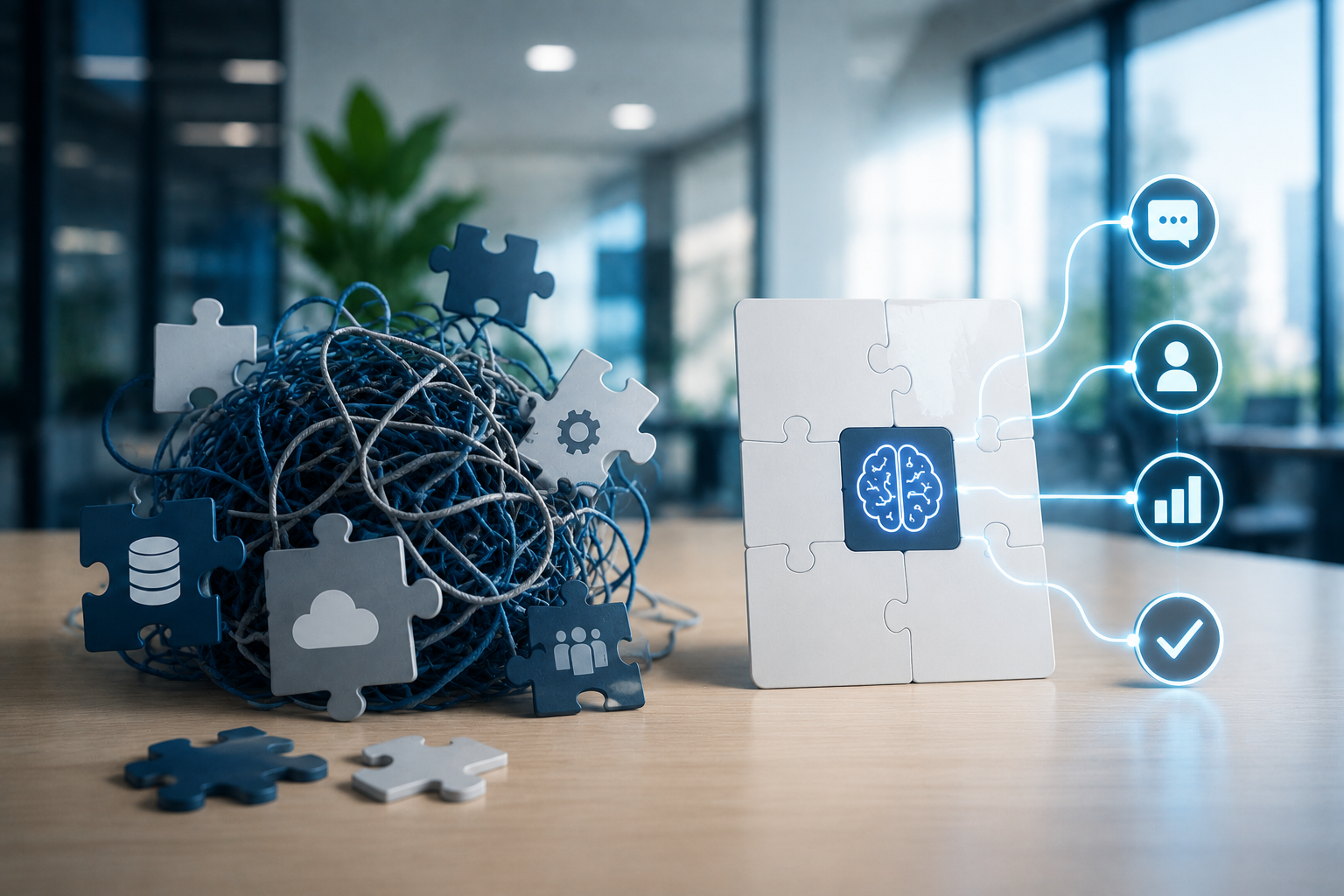
As a result, many companies ended up creating an increasingly complex automation ecosystem that still required people to act as translators between systems.
Employees became the connectors.
They copied information from one platform to another. They interpreted documents. They validated exceptions. They coordinated handoffs.
Technology accelerated execution while humans remained responsible for keeping the process together.
Over time, this creates a paradox: organizations become more digital while operations remain equally dependent on manual coordination.
That is where AI process automation starts becoming strategically different.
AI Introduces a New Layer: Operational Interpretation
One of the biggest misconceptions surrounding AI adoption is assuming that intelligence should replace people.
In reality, the strongest operational use cases rarely remove humans entirely.
They remove unnecessary operational interpretation.
Historically, companies automated actions.
Now they can automate understanding.
AI systems can read incoming requests, extract information from unstructured documents, classify intent, identify anomalies, prioritize cases, recommend decisions, and trigger actions across multiple environments.
This changes the architecture of operations.
Instead of requiring people to continuously translate information into system-compatible formats, organizations can build processes that understand inputs more naturally and move work forward automatically.
The consequence is not fewer decisions.
The consequence is that people spend more time making meaningful decisions and less time enabling the process to continue.
That difference sounds subtle.
Operationally, it changes everything.
Why Most Automation Projects Underperform
When automation initiatives fail to produce impact, the explanation is often blamed on technology selection.
The platform was insufficient.
The integration was incomplete.
The model underperformed.
Those factors matter, but they are rarely the primary issue.
More commonly, organizations attempt to automate processes they do not fully understand.
Teams document ideal workflows instead of actual workflows. Decision points remain invisible because they live inside people’s experience rather than inside systems. Exceptions become informal practices. Critical knowledge remains distributed across departments.
Then automation gets introduced on top of that reality.
What companies end up scaling is not efficiency.
They scale operational complexity.
This is why successful AI process automation initiatives usually begin with a different question.
Not:
“What can we automate?”
But:
“What creates friction in how work currently moves?”
That question tends to reveal opportunities that are much more valuable than simple task automation.
Repeated validations.
Delayed approvals.
Information re-entry.
Context switching.
Disconnected ownership.
Decision bottlenecks.
These are rarely solved by adding another workflow.
They require rethinking process design.
The Companies Seeing Real Impact Are Thinking in Systems, Not Tasks
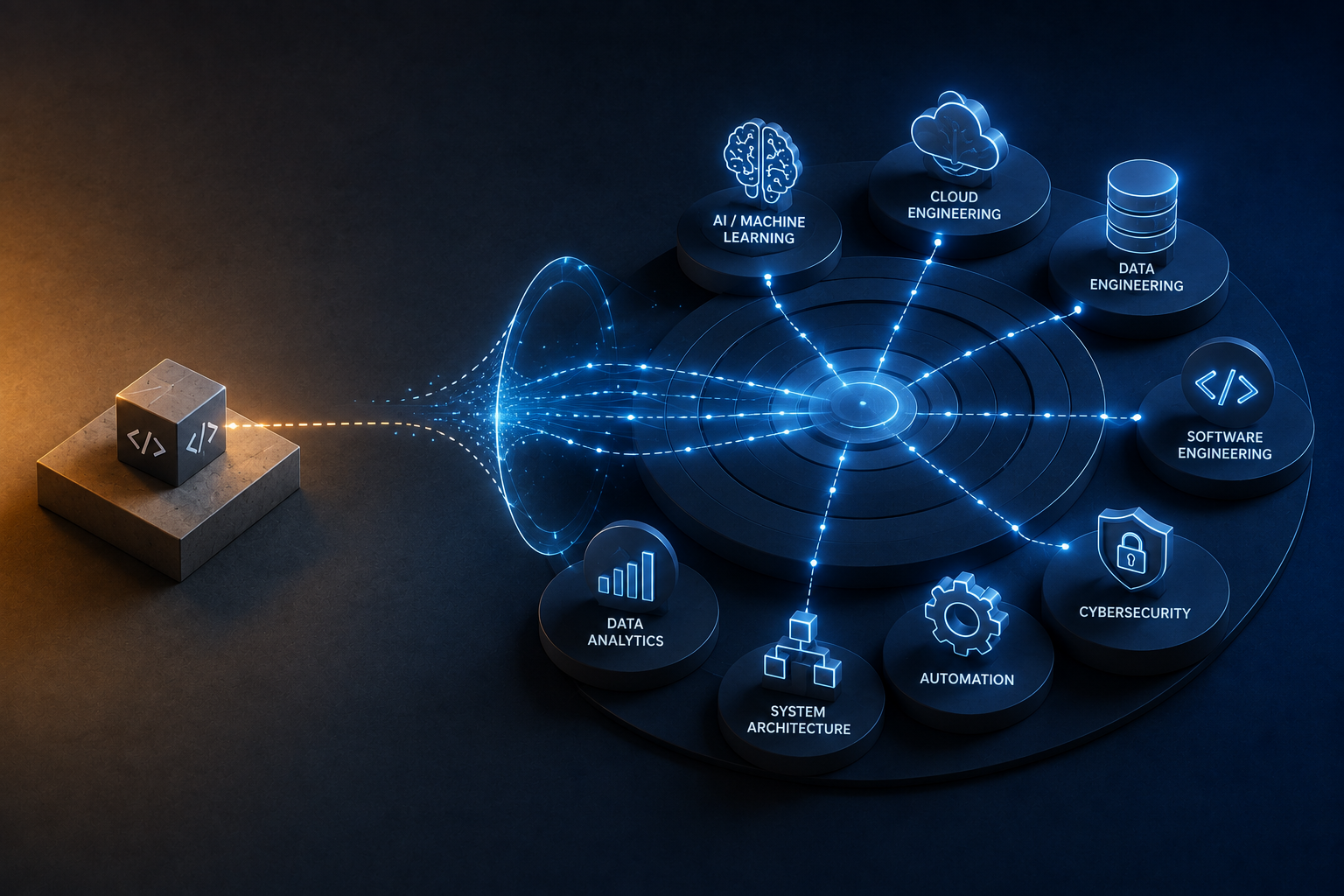
The most effective organizations are moving away from isolated automation initiatives and toward operational orchestration.
Instead of optimizing individual activities, they design environments where systems, people, data, and decisions interact with less friction.
That means viewing automation as infrastructure rather than functionality.
A CRM is no longer just a CRM.
An ERP is not simply a database.
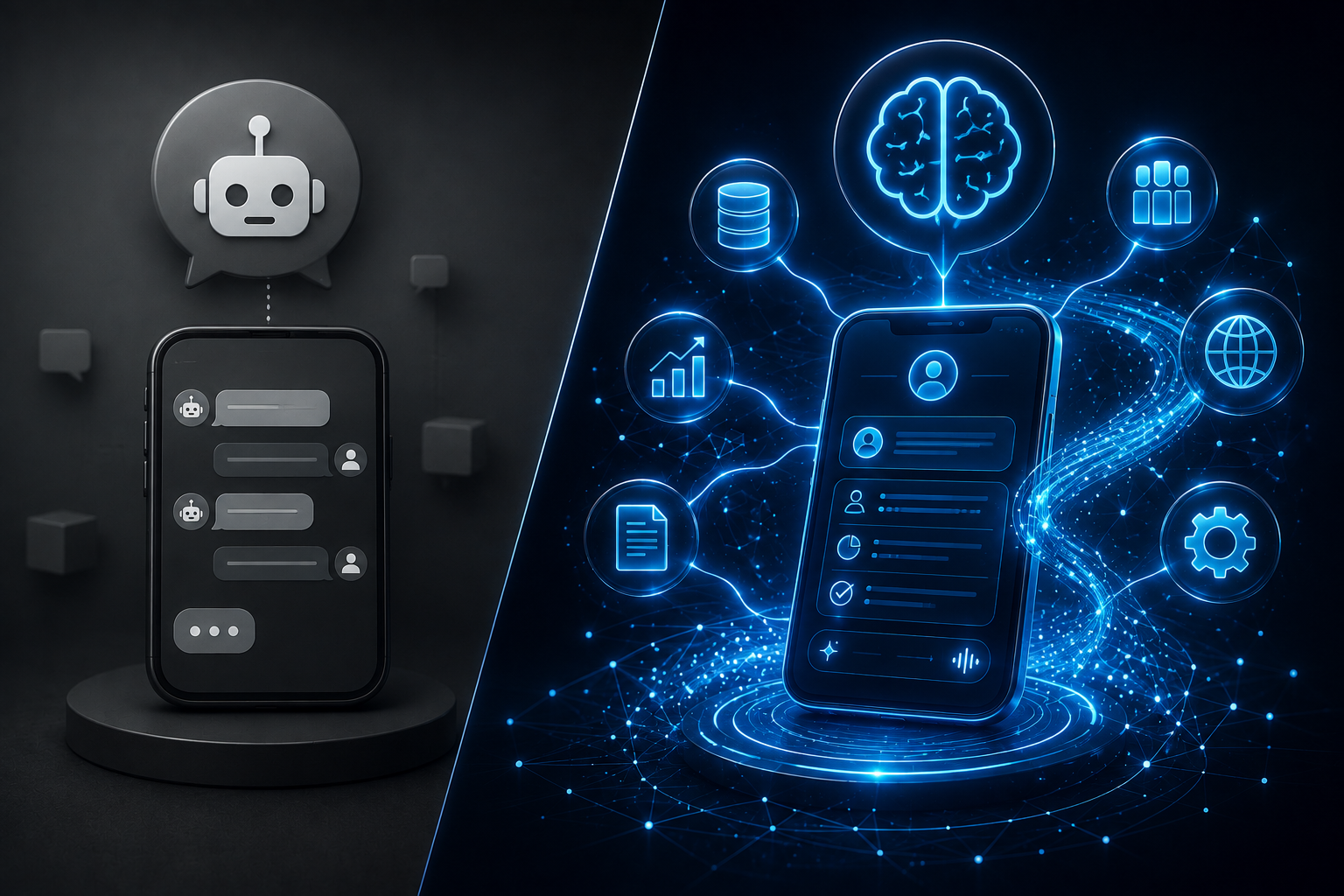
Conversational interfaces are not support channels.
Every component becomes part of an operational ecosystem.
AI acts as the layer that interprets, coordinates, and activates movement across that ecosystem.
This perspective changes investment decisions.
Instead of asking whether automation will save hours, companies begin asking whether operations become more adaptive, more scalable, and more resilient.
That is a much more strategic conversation.
The Next Competitive Advantage Will Not Be More Software
Most companies already have enough software.
What they lack is operational continuity between the systems they already own.
Adding tools without redesigning movement only creates additional layers of complexity.
The organizations that generate disproportionate results over the next years will not necessarily be the ones adopting the most AI.
They will be the ones that integrate intelligence into the moments where operations slow down.
That is a fundamentally different challenge.
And it requires a different way of building.
How We Approach AI Process Automation at Clarika
At Clarika, we see AI process automation as an operational design challenge before it becomes a technical one.
Technology matters—but architecture matters more.
Our approach begins with understanding how work actually happens across teams, systems, decisions, and business objectives.
From there, we identify where intelligence can reduce friction, where orchestration can eliminate operational gaps, and where automation can create measurable business movement.
Sometimes that means connecting platforms.
Sometimes it means introducing AI-driven decision support.
Sometimes it means redesigning an entire operational flow.
The objective is never automation for its own sake.
The objective is building operations that can evolve without becoming increasingly dependent on manual coordination.
Because the companies that win with AI will not be the ones doing the same work faster.
They will be the ones redesigning how work happens altogether.
If your company is investing in technology but still feels slower than it should, the next opportunity may not be adding more tools—it may be redesigning how operations happen.
At Clarika, we work with organizations to transform disconnected workflows into intelligent, scalable operational systems powered by automation and AI.
Visit us at: clarikagroup.com
—
Written by Manuel Aliaga
CEO at Clarika
About this article
Category
AI Transformation
Published
July 14, 2026
Reading time
5 min read
Ready to transform your business?
Talk to our team about AI and software solutions tailored to your industry.
Book a Discovery CallMore articles