The SME That Doesn't Adopt AI in the Next 2 Years Will Be Out of the Market
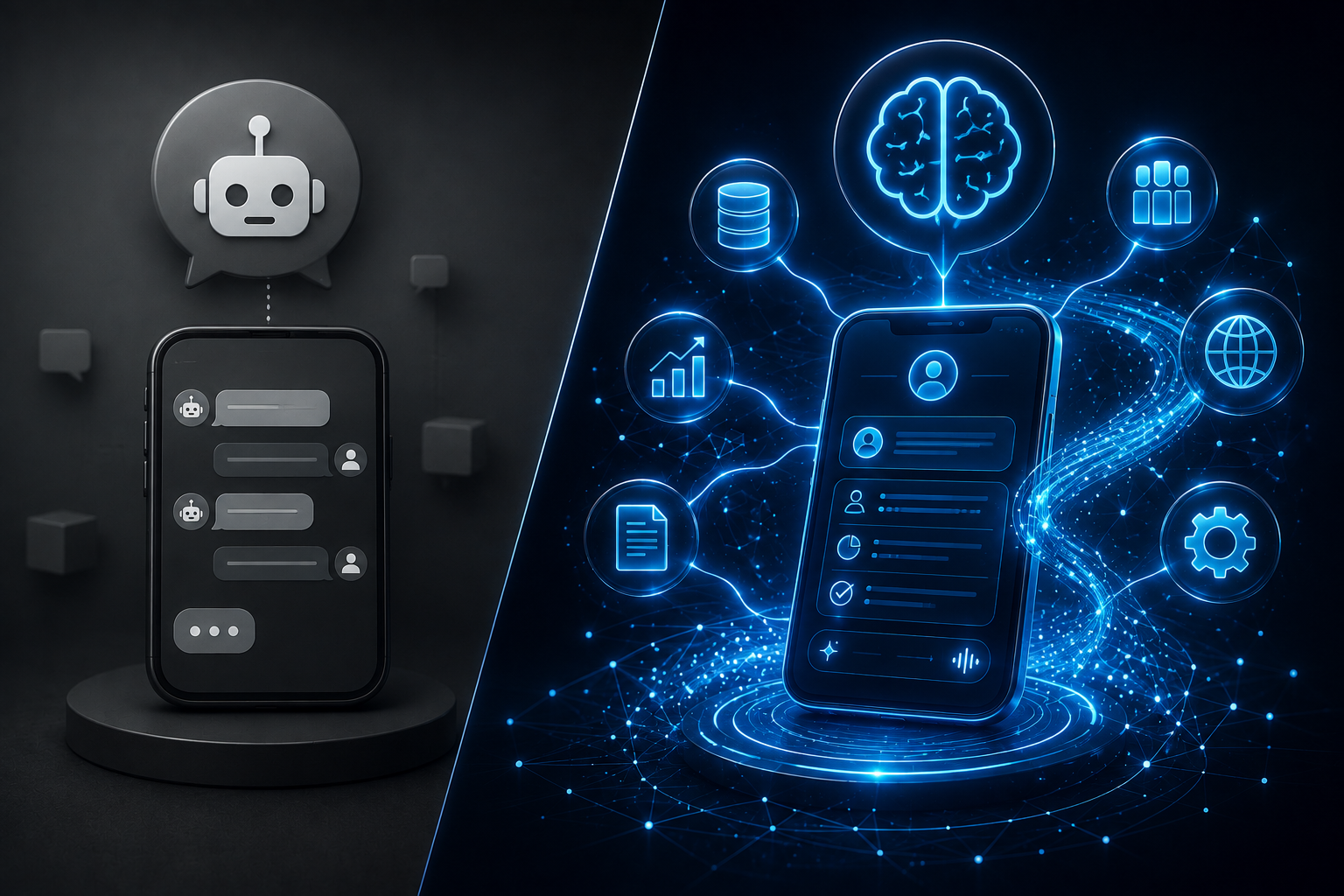
The SME Market Has Split in Two: AI Adopters vs. Those Still Waiting
Something is happening right now across virtually every sector where small and medium businesses operate, and it's nearly impossible to see from inside a company while it's occurring. There's no announcement, no single event. What there is instead is a silent accumulation of individual decisions that are reshaping the competitive landscape.
On one side are companies that at some point in the last two years incorporated artificial intelligence into at least one operational process. Not in every process. Not radically. But they did it, measured results, learned, and applied it again. Today those companies operate with a lower cost per transaction, respond faster, have more information for decision-making, and can scale without hiring more people. It's not that they're smarter. It's that they have a different cost structure.
On the other side are companies that have spent months — in many cases more than a year — in evaluation mode. "We're looking at what options exist." "We want to fully understand before committing." These positions aren't irrational. They're cautious. But the gap between these two groups doesn't stop widening during the evaluation: every month that passes, companies already running AI refine processes, reduce response times, improve customer experience, and build organizational learning capital that can't easily be bought or replicated.
The distance that creates is cumulative. And recovering accumulated distance doesn't cost the same as having avoided it.
When AI for SMEs Stopped Being a Competitive Edge and Became the Cost of Staying in the Market
To understand what's happening today, it's worth looking at what happened with specific technologies that went through exactly the same cycle artificial intelligence is going through now.
In the early 1990s, email was a genuine competitive advantage. Companies that adopted it could communicate with clients faster than those still depending on fax. That advantage didn't last more than a decade. By the mid-2000s, not having email wasn't a relative disadvantage — it was a signal that the company wasn't operating professionally. Email stopped being a differentiator and became minimum infrastructure.
The same process happened with websites in the late 90s, with e-commerce between 2008 and 2016, with social media presence between 2012 and 2018, with cloud infrastructure between 2016 and 2022. In every case, there was a period where early adoption gave advantage. Then came the mass adoption phase, where not adopting started to cost. And finally the standard normalized: what was exceptional became obligatory.
What's happening with AI for SMEs in 2025 and 2026 is not the "early adoption" phase. That already passed. We're in the mass adoption phase — exactly when the gap between those inside and those still outside widens fastest. And what differentiates this cycle from all previous ones is velocity: email took 15 years to move from advantage to infrastructure. AI is making that journey in four or five.
Four Signs AI Is Already Reshaping Your Sector, Even If You Don't See It in Your Numbers Yet
The effects of mass AI adoption aren't visible uniformly to everyone. Companies that adopted first already see them in their numbers. Those that haven't adopted don't feel them as a problem in their own financials yet. But there are signals observable before the impact reaches the balance sheet.
Signal 1: your competitors' cost structure is changing. When a company in your sector can handle more customer inquiries with the same team, generate more proposals with less administrative effort, or process more orders without hiring more staff, it has margin flexibility you don't have. It won't necessarily lower prices immediately, but it can use that margin to invest more in customer acquisition or absorb costs it couldn't before. That doesn't show up in any price list. It shows up over time in market share.
Signal 2: customer expectations are being recalibrated upward. What five years ago was a differentiator — immediate response, proactive follow-up, availability outside office hours — is becoming a basic expectation. A customer who received a two-minute response from a company in your sector now has that as a reference. The next time they contact your company and wait four hours for a response, they won't think "this company is slow." They'll think "that other company was more efficient."
Signal 3: your company's data exists but isn't being used. Most SMEs have more data available today than at any previous point: sales records, customer history, inventory movements, web traffic, social media. The problem is that processing it manually takes too long. Companies that adopted AI data workflows converted that inert information into real-time operational intelligence. Those that haven't still have the data — just without the capacity to use it when it matters.
Signal 4: top talent is choosing where to work based on tools. The best professionals in sales, operations, and technology want to work in environments where AI is part of the daily workflow. A company that hasn't adopted it doesn't just operate less efficiently — it progressively loses access to the talent that could close that gap.
Why 2026 Is the Critical Year for SMEs to Adopt Artificial Intelligence
The question that persists isn't "does AI work?" That conversation is settled. The question is: "why now and not later, when the technology is more mature?" It has a concrete answer.
The argument for waiting implies the technology isn't yet capable of generating real results in real contexts. That condition stopped being true at least two years ago. Today there are thousands of SMEs across Latin America with AI solutions in production solving concrete operational problems: customer service, document processing, report generation, commercial follow-up. These aren't pilot projects. They're systems that are already part of daily operations.
The cost of waiting one more year isn't just not having those efficiencies for twelve months. It's that during those twelve months, companies that already adopted kept improving their systems. When you finally reach the starting point where they were a year ago, they'll be a year further ahead. The distance doesn't stay fixed: it grows.
There's also an organizational learning factor that can't be transferred by simply installing a system. Adopting AI isn't just implementing a tool — it's learning to redefine processes, to trust systems that didn't exist before, to iterate when something doesn't work as expected. That learning takes time and requires real experience with the system in production. Companies that started earlier have that incorporated. Those starting later have to build it from scratch.
SMEs Can Implement AI Faster Than Corporations — That's a Structural Advantage
When you have in-depth conversations with SME executives who haven't adopted AI, the "we're small, that's for big companies" narrative almost always conceals something more specific: they don't know where to start and don't want to commit resources to something that might not work. That's not a lack of strategic vision. It's reasonable risk management in a context of incomplete information. And it has a solution.
But in terms of adoption speed, an SME's size is a structural advantage. A corporation that wants to implement AI in its customer service process has to coordinate with IT, compliance, legal, the existing CRM vendor, the change management team, and half a dozen other stakeholders. That alignment process can take months before a single line of code is written. An SME can make the decision this week, define the scope next week, and have a first prototype in production before the month ends.
That execution speed is an enormous asset. AI adoption in an SME doesn't require full transformation — it requires identifying one process with high volume, high repetitiveness, and a low margin for error, and working that process first. With clarity about the problem and a technology partner who knows how to execute, company size is irrelevant.
The Three AI Use Cases That Drive the Fastest Results in SMEs
After working on artificial intelligence projects with companies across different sectors in the region, three types of processes consistently emerge as the best entry points for an SME starting out — not because they're the only ones, but because they have the right characteristics for a first project: high volume, high repetitiveness, measurable impact in weeks, and low operational risk during implementation.
1. Customer service with conversational AI. Most SMEs receive the same questions every day: hours, prices, order status, payment methods, warranty conditions. Those queries consume time from people who could be generating value elsewhere. An AI conversational assistant, integrated into WhatsApp, the website, or any channel customers already use, can resolve between 60% and 80% of those queries without human intervention, available 24/7, with consistent real-time responses. The human team is freed for situations that genuinely require judgment: conflicts, complex cases, sales opportunities that need personalized handling.
2. Data analysis and operational intelligence. An average SME has data scattered across a management system, Excel spreadsheets, an e-commerce platform, social media, and bank statements. Processing all of that in an integrated way requires time and skills most teams don't have available daily. AI data workflows connect those sources, process the information automatically, and present it in dashboards the team can use to make decisions without someone spending hours building tables. How much each product line sold this week versus last. Which customers bought once and didn't return. Which costs are growing above expectations. That information exists in the company's systems — but without infrastructure to process it, it stays invisible.
3. High-volume operational process automation. Quotes, proposals, invoices, collections follow-up, internal request routing, incoming email classification. These processes consume hours of daily work from qualified people who could be focused on higher-value tasks. AI process automation doesn't replace human judgment on exceptions — it liberates it for exceptions, by automating the standard flow. A company generating twenty project quotes per week, two hours each, can reduce that to twenty minutes per quote with a system that takes the relevant information, processes it, and generates a draft the team only needs to review and approve.
What these three use cases have in common: measurable results in weeks, not months, no need to rebuild technology infrastructure from scratch, and the organizational learning that makes the second and third projects easier than the first.
The Real Cost of an SME Delaying Artificial Intelligence Adoption
The cost of not adopting AI doesn't appear on a labeled line of the income statement. It's more diffuse — and it's precisely that diffuseness that makes it easy to ignore until it's too obvious to ignore anymore.
The most direct cost is the accumulated operational efficiency gap. If a company in your sector reduced its customer service cost by 35% by automating 70% of recurring queries, that 35% isn't just a one-time advantage — it's additional margin that can be reinvested in customer acquisition, product improvement, or scaling capacity. Projected over twelve or twenty-four months, that margin differential generates accumulated advantage that doesn't disappear even if you implement AI tomorrow. Closing a two-year accumulated advantage gap costs more than having avoided it.
The second cost is the market position lost while not acting. Customers who chose a competitor because they responded faster, had off-hours availability, or followed up proactively. Those customers don't necessarily come back when the company finally improves its processes. They've already established a relationship with another provider.
The third cost is an organization that becomes harder to modernize as time passes. Teams that haven't developed any culture of working with intelligent systems will have greater resistance to change when the moment finally comes. Processes that harden over years in manual formats generate accumulated exceptions that make later automation more complex and costly.
The most expensive response isn't investing in a project that underperforms. It's continuing to wait while the gap grows. An AI project that doesn't deliver can be adjusted. The months of accumulated advantage competitors build while that's being evaluated cannot.
How Clarika Helps SMEs Implement AI Without Multi-Year Projects or Impossible Budgets
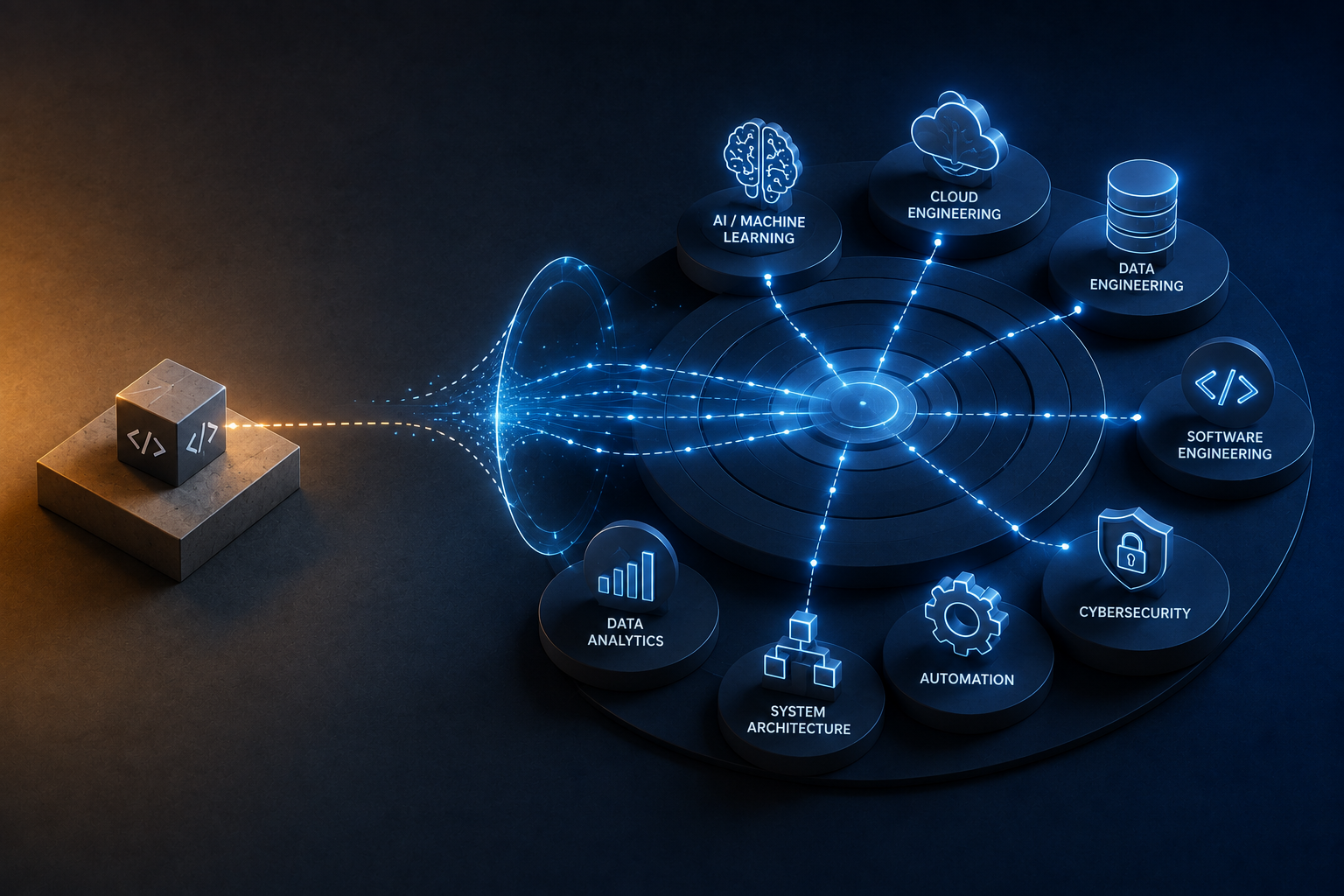
Clarika has spent over fifteen years building software and AI systems for companies across Latin America and the United States. In that time it worked with organizations of all sizes — from startups to corporations — and that experience gave clarity about something many companies learn later than they'd like: the value of an AI project is not in the sophistication of the technology. It's in how well that technology solves a concrete, measurable business problem.
The starting point with an SME isn't a generic digital transformation proposal. It's a conversation about the company's specific processes: where time is being lost, where customers are being lost, where the team is doing work that could be automated. From that comes a bounded solution with a clear scope, a realistic timeline, and success criteria defined before work begins.
The three services Clarika works with SMEs on:
- AI Process Automation — Automated flows for high-volume processes: document generation, approvals, request classification and routing, task tracking and status communications. The goal is to reduce manual work in the processes that consume the most time and require the least human judgment, freeing the team for work that does.
- Conversational AI — Intelligent assistants for customer service, recurring query management, sales, and internal support. Integrated with the channels the company already uses: WhatsApp, the website, messaging platforms. The assistant handles standard flows; the human team steps in for what requires it.
- AI Data Workflows — Systems that connect the company's data sources, process them automatically, and deliver actionable information in real time. No manual reports. No hand-built spreadsheets. No data processed once a month by which point it's too late to act on it.
If you want to understand what makes most sense for your company's specific processes, let's talk. No predefined budget, no generic proposal — a conversation about where the highest-impact opportunity is.
Frequently Asked Questions About Artificial Intelligence for SMEs
How much does it cost to implement artificial intelligence in an SME?
The investment range varies significantly by process, technical complexity, and integrations required with existing systems. Entry-level projects for SMEs — a conversational assistant or a specific process automation — are considerably more accessible than most assume. The right starting point isn't calculating an abstract cost: it's identifying the process with the highest potential impact, defining the success criteria, and estimating the expected return before defining the investment. In most well-defined cases, the return is visible in weeks.
How long does it take to see concrete results with AI in a small or medium business?
With a well-defined process and an experienced implementation team, first results are visible within weeks. A conversational assistant can be in production handling real queries in four to six weeks from kickoff. An operational process automation in a similar timeframe. More complex projects — multiple integrations, data flows across several systems — typically take two to four months. The factor that most affects the timeline isn't the technology: it's clarity about the process and team availability for validation checkpoints.
Does an SME need an in-house technology team to adopt AI?
No. Most AI projects for SMEs can be executed entirely with an external technology partner handling design, implementation, and maintenance. What the company does need is clarity about the process to automate, access to the people who know that process in detail — those who execute it day-to-day, not just those who supervise it — and availability to participate in validation checkpoints during implementation.
What SME processes can be automated with artificial intelligence?
Any process that is repetitive, high-volume, rule-based in definable ways, and doesn't require human judgment in the majority of cases is a candidate. The most common in SMEs across the region: customer service and recurring query resolution; lead and commercial pipeline follow-up; quote, proposal, and invoice generation; collections follow-up; incoming document processing and classification; operational and commercial report generation; internal request routing. Poor candidates for full automation: processes requiring negotiation, empathy, or judgment in exceptional situations.
Does artificial intelligence replace employees in SMEs?
It's not the goal of well-designed projects, nor the most common outcome in practice. What typically happens is a redistribution: people who previously spent hours on repetitive, low-value tasks start dedicating that time to work requiring judgment, client relationships, or complex problem solving. In many cases, adopting AI allows the same team to serve more customers and generate more revenue without growing headcount.
Written by Manuel Aliaga, CEO & Co-Founder at Clarika.
About this article
Category
AI Transformation
Published
August 3, 2025
Reading time
8 min read
Ready to transform your business?
Talk to our team about AI and software solutions tailored to your industry.
Book a Discovery CallMore articles